
The Connection Between Money and Building Culture
The Bitcoin Newsletter 34
Welcome to the 34th Edition of The Bitcoin Newsletter
2024 was a remarkable year for Bitcoin, exceeding expectations, while 2025 has been the opposite, challenging them and once again showing that the monetization of bitcoin unfolds in mysterious ways.
The network grows, the user base expands, and the price rises—but never exactly as predicted. This uncertainty is exactly what makes decentralized markets powerful, revealing which ideas and technologies truly thrive.
What does hard money mean for our built environment, long shaped by short-term speculation?
Modern architecture often resists timeless principles of beauty seen in the Mona Lisa, the Pyramids, or the Golden Ratio.
I will explain how this relates to the devaluation of money and why bitcoin, as hard money, could help reshape building culture, fostering designs that reflect long-term value rather than short-term trends.
This essay also forms part of my upcoming book, Digital Real Estate, which I have been working on for over 2.5 years.
I’ve tested the theories and strategies in practice, and this summer I explored the treasury phenomenon and its influence on real estate, incorporating it into the book, which significantly extended the writing process.
The book is now finally scheduled for release in Q2 2026 via Bitcoin Magazine (USA & international) and Aprycot Media (Germany). Newsletter subscribers will, of course, be the first to know—and receive a special discount.
Best regards,
Leon
DEEP DIVE
The Connection Between Money and Building Culture
Until the mid-20th century, real estate was understood as a long-term asset and financed accordingly. Today, however, it is mostly approached with a short-term exit strategy, sacrificing durability, safety, and quality for faster returns. The result is a built environment that frequently harms rather than serves its occupants.
Indoor air quality can be five times worse than outdoors, and cost-cutting practices, like under-insulating plumbing or downsizing structural materials, can lead to failures that are expensive, hazardous, and entirely preventable. Builders, focused on fast exits, rarely care about the long-term effects.
Bitcoin, by encouraging low-time-preference thinking, offers a path to reverse this trend. It can realign incentives around longevity and true utility, enabling architectural investment that prioritizes health, resilience, and human-centered urbanism.
Urbanism is hardware, people are software: bad hardware produces bad software, setting limits on human potential (@AustinTunnell). Postmodernism, mixed with rules and bureaucracy, has only deepened these flaws.
But with the discipline of hard money, we can return to a built culture more aligned with durable materials, natural geometric forms, and human needs, laying the groundwork for more resilient, sustainable, and people-centered communities.
In the following, I will explore how bitcoin, as a disinflationary monetary standard, could transform construction practices, architectural aesthetics, and urban design.
Low time preference
In general, we can expect deflation to lower construction costs, enabling more people to build their own homes, though, as in any industry, specialization and division of labor will continue to play a vital role.
While it’s true that in historical periods like Victorian England (roughly 1837–1901), when society largely operated under a gold standard, homeownership rates were low and poverty widespread, it’s important to recognize that those limitations were shaped by the technological and material constraints of the time, not by the nature of hard money itself.
Under a Bitcoin standard, modern efficiencies would intersect with a deflationary environment, bringing costs closer to their true level of production.
As a result, housing would become far more affordable, enabling more people to build or commission homes over longer time horizons shaped by a low time-preference mindset of planning, saving, and gradual wealth accumulation.
However, it’s important to distinguish between the cultural ideal of “low time preference” promoted within today and the praxeological concept of time preference as described by Ludwig von Mises.
From an economic standpoint, individuals always value present goods more than future goods, this foundational idea explains the existence of interest and consumption itself. What we often advocate for is a shift away from impulsive consumption toward more deliberate, future-oriented behavior.
This is connected to the opportunity costs associated with spending bitcoin, a money that gains purchasing power over time. Why spend my bitcoin on a new car today when I can buy a house with it someday?
While a deflationary environment can incentivize such long-term thinking, in the medium-term increased wealth under a Bitcoin standard may also lead to higher levels of present consumption, simply because people can afford to satisfy more of their immediate desires.
This doesn’t contradict the principle of time preference; rather, it reflects its real-world application: people still prefer goods sooner rather than later, unless compensated, for example, through interest or utility.
Entrepreneurs can earn interest (rent) by taking risks and investing their time and capital into building a house that they can then rent out. The cost of building a house would depend on the cost of materials, labour, and the reasonable profit margin for the builder. The size and location of the land also affects the price.
So building a house will make sense for people with expertise or for people who have time and enjoy it. Of course, for those who can’t build, it wouldn’t make any sense. They then decide between buying and renting.
Under a Bitcoin standard, the economy’s enhanced ability to accumulate and preserve capital may very well, over time, support more meaningful resource allocation toward construction. However, this shift is not automatic, it depends on real productivity gains, entrepreneurial initiative, and genuine market demand.
Unlike today’s system, where artificially cheap credit and monetary expansion often flood the real estate sector with abundant but misallocated capital, scarce money would naturally encourage lower time preference decision-making. This would shift focus away from quantity and short-term profit toward quality, longevity, and craftsmanship.
As capital becomes more precious, decisions about the built environment carry greater weight, since misallocations are harder to cover up with cheap credit, potentially leading to a renewed emphasis on durability and design integrity, while the burdens of excessive regulation may also diminish in significance.
As a result, we can expect increased attention to detail and a shift in who undertakes construction, favoring developers with a long-term vision. This would likely lead to higher-quality buildings, more aesthetically refined architecture, and the freedom to invest additional money and time into creative, enduring design enhancements.
Maslow’s hierarchy of needs
By contrast, in an inflationary monetary system, where escalating land prices, material costs, and labor expenses drive building costs ever higher, the result is often diminished craftsmanship and stifled creativity, illustrating how profoundly a financial regime shapes construction practices and architectural design.
Hard money not only preserves productivity but also ensures that real estate is priced according to its utility.
Moreover, it frees up resources to focus on enriching pursuits and leisure, which are hallmarks of a high culture.
„A society grows great when old men plant trees in whose shade they know they shall never sit.”
Greek Proverb
Throughout history, societies that operated with hard monetary principles, such as the Egyptians, Sumerians, Greeks, Romans, or Italian city-states, demonstrated advanced understandings of mathematics, time, and architecture.
Leisure time enabled these cultures to devote themselves to art and architectural innovation.
What we now call “beautiful” architecture is the result of such leisure, made possible by strong purchasing power, combined with a dedicated investment of capital, time, and effort.
When basic needs are reliably met, individuals can ascend toward higher pursuits: craftsmanship, aesthetics, and legacy.
This relationship between economic stability and creative output aligns closely with Maslow’s hierarchy of needs. Once this connection is understood, it becomes evident that architecture and hard money are deeply intertwined.
According to Maslow’s hierarchy of needs, a psychological framework often depicted as a pyramid, human well-being progresses through five levels: (1) physiological needs like food, water, and shelter; (2) safety and security; (3) social belonging; (4) esteem; and (5) self-actualization.
While just one of many models, it remains influential because it highlights shelter as the essential foundation upon which all other aspects of well-being depend.
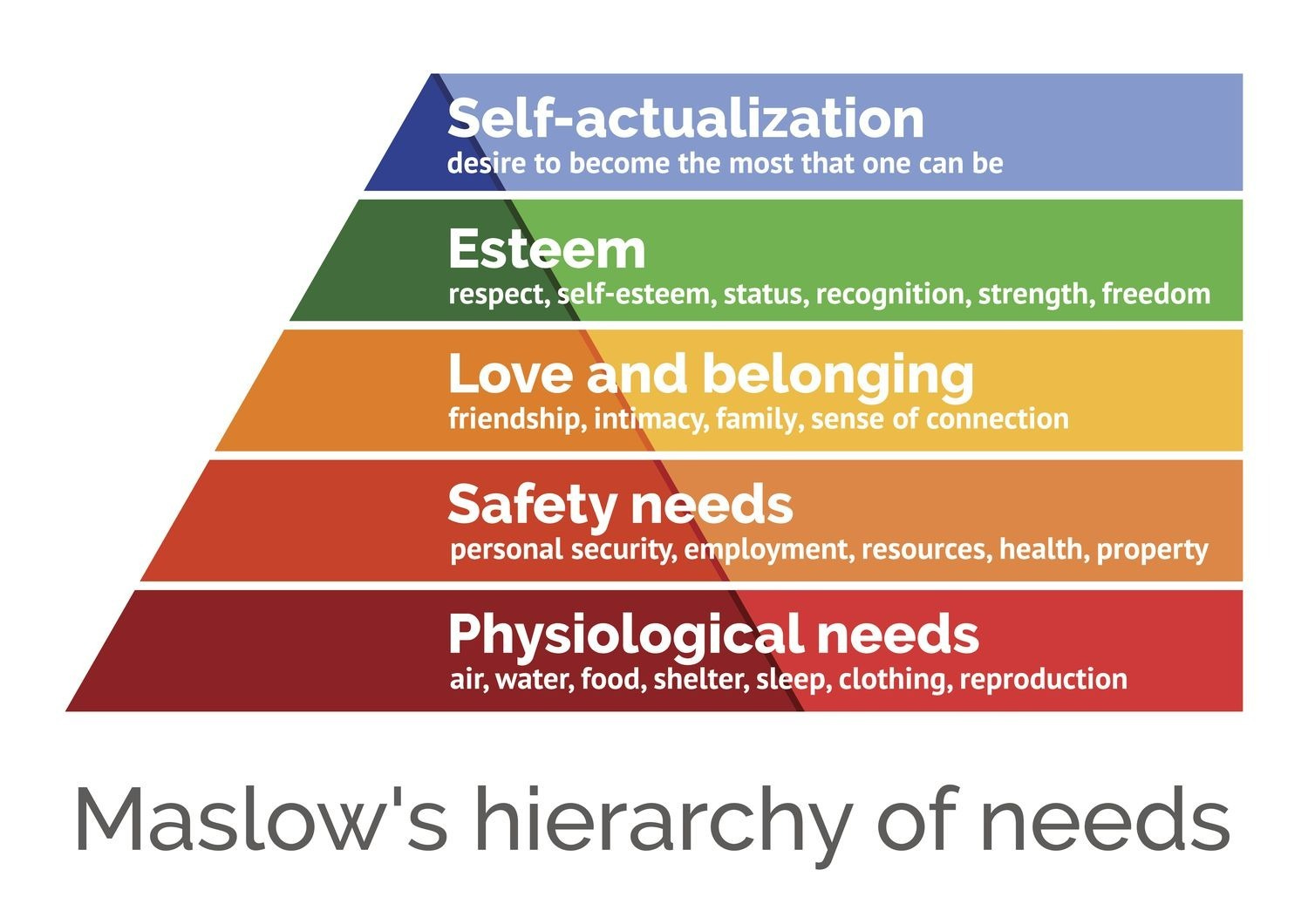
When housing is treated primarily as a financial instrument rather than a place to live, affordability and quality suffer, undermining this foundation.
Bitcoin addresses this by preserving purchasing power without inflating asset prices, restoring accurate price signals and allowing homes to return closer to their true utility value. Over time, this shift makes housing more affordable for those who hold bitcoin.
Architectural Transformation
Over the 20th and 21st centuries, the age of standardization, industrialization, and modernism, fiat money and modern architecture have evolved in parallel.
This transformation was not caused by fiat money alone but reflected a broader industrial drive toward uniformity and perceived efficiency.
As society moved away from traditional, human-scaled, guild-based production, short-term gains and perceived efficiency took precedence, shaping both the mechanization of money and the homogenization of the built environment.
In the late 19th century, architecture, art, and design were still rooted in historical styles, marked by ornamentation, rich colors, and intricate detail.
This age of Revivalism sought to evoke the grandeur of the past, with buildings and decorative elements referencing earlier traditions. As the industrial revolution advanced, however, new movements began to challenge this approach.
Art Nouveau, emerging in Belgium in the 1890s, embraced flowing lines, organic forms, and motifs drawn from nature, breaking free from rigid imitation.

After World War I, Art Nouveau gave way to Art Deco, a style of geometric precision and machine-inspired aesthetics that reflected industrialization and global progress. The Empire State Building in New York City, completed in 1931, stands as one of the most important and enduring examples of this movement.
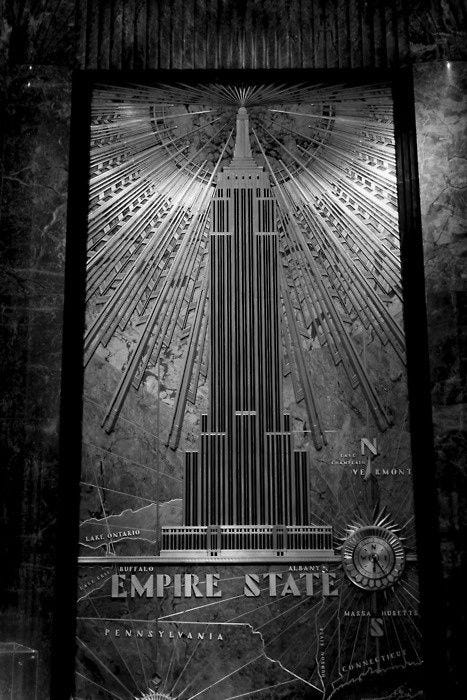
But even Art Deco was short-lived. The rise of mass production and synthetic materials like plastics, laminates, and asbestos drove architecture toward greater functionality and standardization.
Buildings increasingly resembled laboratory experiments, assembled from industrial compounds rather than natural materials, often with little concern for long-term health or environmental impact.
Adolf Loos was a radical early‑20th‑century Viennese architect who challenged prevailing norms by stripping away all ornamentation he deemed unnecessary.
His 1908 lecture Ornament and Crime, denounced decoration as wasteful and called for an architecture of pure function, influencing a generation of modernists.
Swiss-French architect Le Corbusier carried this vision further, drawing inspiration from ships, silos, and military bunkers to create stark, industrial forms.
Architect Leon Krier later noted the resemblance between Le Corbusier’s post-war concrete aesthetic and the fortifications built by Organisation Todt, the National Socialist civil and military engineering group led by Albert Speer during World War II.
He suggested that modern architecture absorbed not only the raw materiality of war but also its centralized, authoritarian ethos.
Architecture is always an expression of our inner world, and the experiences of the two World Wars profoundly shaped the architecture of the 20th century.
The wars left more than physical destruction, they fractured cultural memory, disrupted tradition, and deeply scarred those who endured them. Many leading figures of early modernism emerged from this time.
While it is speculative to apply clinical diagnoses in retrospect, historians and neuroscientists increasingly suggest that trauma, and possibly conditions like autism or PTSD, influenced the cognitive frameworks of these architects.
This does not diminish their craftsmanship or achievements, but it offers a deeper lens through which we might understand why so many 20th-century buildings feel emotionally detached, visually sterile, or relationally cold.
The move toward minimalism and abstraction may not have been purely idealistic, but also neuropsychological, shaped by minds reacting to overload, trauma, or disconnection.
In post-WWI Germany, the Bauhaus school emerged as a response to the era’s cultural and technological upheavals. Founded in 1919 by Walter Gropius and later shaped by figures like Ludwig Mies van der Rohe and Marcel Breuer, Bauhaus sought to unite mass production with aesthetic clarity, standardizing design across disciplines, from furniture and typography to entire buildings. Its focus on simple, functional forms defined the foundations of modern minimalist architecture.
The influence extended well beyond architecture, visible today in typefaces, Apple’s sleek devices, and IKEA’s logo and flat-pack furniture.
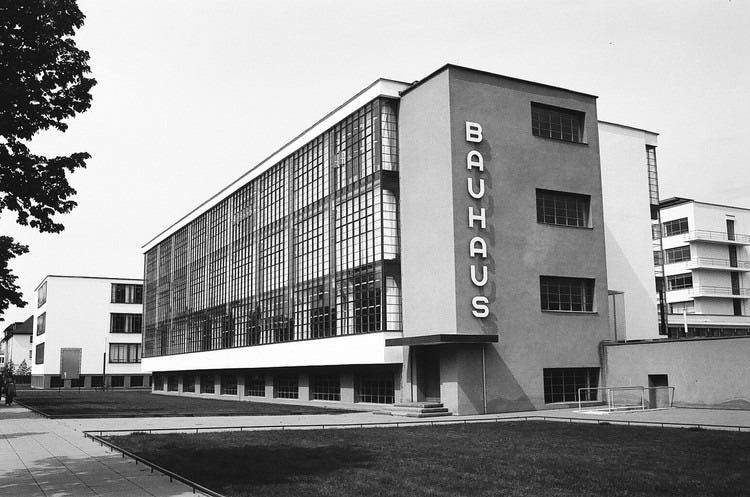
The Bauhaus sought an aesthetic suited to mass production, extending beyond architecture into all areas of design, from furniture and lamps to fonts and even chess sets. To achieve this, its designers turned to materials considered to be modern, such as steel, glass, and plastics, optimized for volume and efficiency rather than artisanal detail, natural forms or health. The goal was ambitious: to prove that functional, minimalist design could deliver affordable and healthy housing for workers.
After the war, the world faced the dual challenges of rebuilding and accommodating a rapidly growing global population. The Bauhaus had already paved the way by championing functional minimalism, using concrete, steel, and glass, to enable fast, cost-effective construction at scale.
By the 1950s, the International Style, rooted in Bauhaus principles, had spread worldwide, replacing ornate stone architecture with concrete, steel, and glass.
Architecture had shifted from a craft of expression to an industry of standardization and efficiency.
But not all minimalism is equal. The Bauhaus once offered bold aesthetic innovation, yet much of what followed devolved into cheap knock-offs. What began as avant-garde experimentation has, in many cases, been reduced to soulless repetition.
Effects/Impact
We now live surrounded by artificial materials, plastics, laminates, composites, that may maximize perceived efficiency but undermine human well-being.
Studies link high-density urban living, particularly in small apartments, to lower fertility rates and weaker social ties.
By contrast, access to natural settings and green spaces is consistently associated with better mental health, lower morbidity, and stronger community bonds.
The instinct to escape the city for green spaces reflects this deeper human need. Studies clearly show that housing conditions and density correlate with health, fertility, and overall well-being.
For millions of years, we lived in nature, and our physiology still depends on it. Green spaces calm the nervous system, offering sensory nourishment that sterile urban landscapes cannot provide.
Clay, wood, warm colors, gardens, and family-centered spaces once shaped the human experience; today, industrial modernism and rising costs have pushed them aside, leaving us with less natural environments and declining quality.
The result is architecture, urban planning, and housing increasingly misaligned with human needs.
Architectural Evolution under the Bitcoin Standard
As the architectural evolution has led to the widespread adoption of minimalist design, it has also, in many cases, sacrificed the unique, human touch found in the artisanal creations of the past.
Bitcoin’s alignment with the natural deflationary tendency of free markets, could catalyze a return to richer, more detailed design. The pendulum of fashion always swings: just as the 20th century craved simplicity, the 21st may rediscover ornament and individuality.
Any form of imposed standardization, beyond what emerges organically from markets, is effectively fiat.
Poor design has always existed, but fiat amplifies it by fueling mass production through artificially cheap credit, rigid regulation, and political capture.
In the fiat era, scale was rewarded not by merit or efficiency, but by proximity to monetary creation. This system favors bigness, of developers, corporations, banks, and states, at the expense of craftsmanship, locality, sustainability, and diversity.
Standardization is not merely an industrial byproduct; it is a political outcome rooted in a monetary system that disconnects cost from consequences.
Short-term debt cycles further compound the problem, regularly wiping out small architectural practices doing meaningful, high-quality work but lacking the financial buffers to survive recessionary periods.
Bitcoin, by reintroducing real cost and scarcity into capital formation, begins to reverse this dynamic, making small-scale, human-centered production viable.
The financial system and real estate are inseparable. As Mark Thornton shows in The Skyscraper Curse, artificially low interest rates and cheap credit fuel malinvestment, often most visibly in record-breaking skyscrapers.
These mega-projects, requiring enormous financing and boundless optimism, are less the cause of crises than a symptom of an overheated, fiat-driven economy. When reality catches up, the bust follows.
This matters because inflation has transformed real estate into a speculative asset and store of value, rather than a utility that serves people.
Regulations and artificial scarcity only deepen the distortion, by driving up costs. A Bitcoin standard could reverse this trend, restoring affordability and re-aligning the built environment with human needs.
But the implications extend beyond affordability and finance. The way money works shapes not only markets but also the very fabric of our built environment, our architecture, neighborhoods, and cities.
Just as fiat incentives have favored scale, speculation, and short-term efficiency over beauty, resilience, and human flourishing, a Bitcoin standard could open the door to a new architectural and urban paradigm.
In another newsletter, I will explore how bitcoin, as hard money, might catalyze a shift toward more durable, people-centered, and aesthetically meaningful environments, a vision of Bitcoin Urbanism.
WORTH TO KNOW
Podcast and publications
Over the past two years, I’ve given many public talks—something outside my nature, but incredibly rewarding as the intersection of Bitcoin and real estate has gained real traction globally. Seeing these ideas spark momentum and turn into actual companies and projects has been a highlight. As I focus on finishing my book, I’ll pause new appearances for now, but I’m sharing a few recent ones below.
Die Zukunft von Immobilien und Bitcoin—Vortrag beim 3. Bitcoin Forum Bayern (German)
In this talk, at Germany’s largest Bitcoin conference, I explain how bitcoin fundamentally transforms the real estate market as a superior store of value, shifting it away from an inflation-driven asset class toward a system grounded in real utility, stability, and fair market dynamics. WATCH
Lohnt sich Investieren ohne Bitcoin noch?—mein Vortrag am Business Day beim 3. Bitcoin Forum Bayern (German)
In this keynote, I explore how bitcoin, as absolutely scarce digital money, is reshaping capital allocation—and why investing without bitcoin will only make sense under very specific conditions going forward. I dive into bitcoin’s competition with gold, art, real estate, and equities, its potential as pristine collateral and a strategic anchor for companies, and the broader implications for global markets. The video quality isn’t perfect, but the core message and urgency for action should still come through clearly. WATCH
IDEAS OF INTEREST
“Energy is the true currency. Bitcoin is based on energy.” - Elon Musk – More and more people are starting to understand that Bitcoin isn’t “tech”. It’s based on energy, and that’s what makes it so powerful long term. Once this perspective takes hold, Bitcoin becomes infrastructure, not a trade. WATCH
Phong Le, CEO of Strategy on the What Bitcoin Did-Podcast – Explains how the world’s largest Bitcoin-treasury company uses preferreds, Bitcoin-backed credit markets, and disciplined leverage to keep accumulating BTC through all market cycles, detailing Strategy’s 2020 pivot, the Saylor-Le treasury model, the mechanics of Strike/Strife/Stride/Stretch, and why they believe Bitcoin remains deeply undervalued. WATCH
Compounding inflation is a global crisis – Since January 2021, major economies have seen purchasing power fall by 21–28% (UK -28.2%, US -23.8%, Euro Area -23.1%, Germany -21.2%), with France at -15.1% and Japan at -12.4%, while China rose only -2.8% amid weak demand. Own bitcoin or be left behind. VIEW
My Life Is a Lie; How a Broken Benchmark Quietly Broke America – Michael Green argues that America’s economic crisis stems from a broken poverty benchmark that understates true living costs, revealing that a family needs ~$140,000—not $31,200—to avoid deprivation, trapping the “middle class” in a no-win system where rising income triggers benefit loss, escalating essentials outpace wages, and the official data masks a collapsing standard of living. READ
Checkmate and Alec Dejanovic on the What Bitcoin Did-Podcast – They dig into how Bitcoin’s market resembles a Great Rotation: long-term holders selling, spot buyers absorbing billions, sovereign accumulation rising, ETFs reshaping market structure, and why the real story is who has the balance sheet to buy this much BTC. WATCH
Michael Saylor’s keynote at the Clear Street Disruptive Technology Conference– Clearly lays out how Strategy’s corporate Bitcoin journey began, what they learned, and where it has led them today. WATCH
If you want to support me. Feel free. You can send me some satoshi/bitcoin.
Lightning: law@getalby.com
On-chain: bc1qyc9q89wjzmvaw729tj3wsrsfhft53mjycrjxdk
Nostr PubKey
npub1v5k43t905yz6lpr4crlgq2d99e7ahsehk27eex9mz7s3rhzvmesqum8rd9
Resources
EPA – Indoor Air Quality Overview READ
Tandfonline – British Homeownership Around 1899 (around 1899, approximately 20% of households in Britain owned their own homes—only about one in five) READ
Trading Economics – UK Home Ownership Rate (2021–2023) (Within England (April 2021–March 2023), about 65% of households owned their homes, including mortgage holders and outright owners) READ
Google Books – Ornament and Crime by Adolf Loos BOOK
Common Edge – The Mental Disorders That Gave Us Modern Architecture READ
International Journal of Environmental Research and Public Health – Indoor Exposure to Air Pollutants. Vardoulakis et al. “Indoor Exposure to Selected Air Pollutants in the Home Environment: A Systematic Review.” 2020 VIEW
Demographic Research – Fertility Differences by Housing Type
“Fertility Differences by Housing Type: The effect of housing conditions or of selective moves?” 2007, Vol. 17, Article 26. READ
PMC – Article on Public Health and Housing READ
Medium – The Separation of Money and State READ
Mises Institute – The Skyscraper Curse PDF READ
Photo Credit: https://silverkris.singaporeair.com/inspiration/arts-culture/galleries-museums/brussels-opulent-art-nouveau-past-on-a-streetcar/
Disclaimer: the content is for informational purposes only, you should not construe any such information or other material as legal, tax, investment, financial, or other advice. Make sure you do your own research before making any investment and be aware of your own risk tolerance. If you like to build on my thoughts, feel free, but please cite me as the source. 2025 - Leon Wankum.
Editing and content creation by Clemens Haidinger.
0A79 E94F A590 C7C3 3769 3689 ACC0 14EF 663C C80B